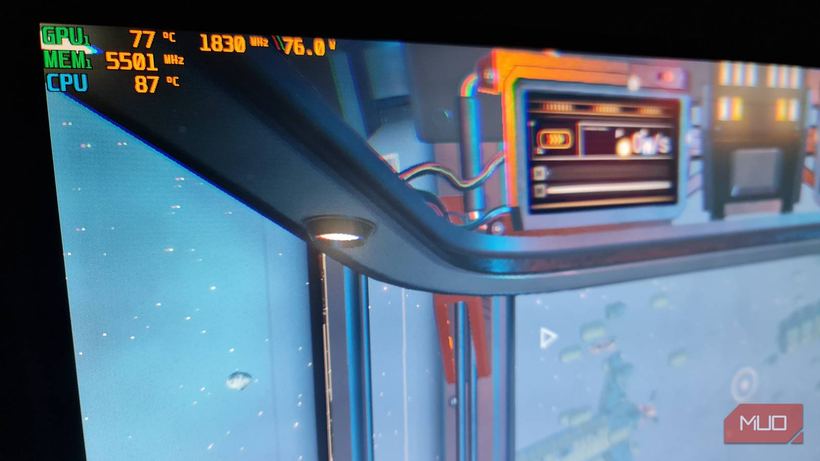
If your laptop heats up above 90–100°C during gaming or heavy load and starts to lag — there's one Windows setting that almost nobody touches. It literally reduces CPU operating temperature by 30–40 degrees in a minute without any noticeable performance loss.
At our service center, we get laptops every week with the complaint 'overheats and lags during gaming.' Most often it's ASUS TUF Gaming, Lenovo Legion, MSI Katana and similar gaming machines. We start with the obvious — replace thermal paste, clean fans, check airflow. Sometimes this knocks off 3–5 degrees. But one time I was working on a laptop where, even after a complete cleaning and thermal paste replacement, the CPU stubbornly held 115–120°C under load. What helped was not at all what I expected.
What's happening inside
Modern CPUs can 'boost' — sharply increase frequency above base when the system allows it. In Windows, the 'Maximum processor state' parameter is set to 100% by default. This means: the operating system gives the CPU a green light for maximum boost under any load — even when opening the Start menu. The processor constantly boosts, overheats, throttles down, boosts again. A vicious cycle — and that's exactly what you see as FPS drops and howling fans.
How to fix it — takes two minutes
Open Control Panel (the old one, not 'Settings') → Power Options → Edit Plan Settings → Change advanced power settings. In the window that opens, find the 'Processor power management' section and inside it — 'Maximum processor state'. Set it to 99% instead of 100%.
Click 'Apply' and immediately open any temperature monitor — HWiNFO or HWMonitor, both are free and publicly available.
On that machine the result was instantly visible: the CPU at idle dropped from 85°C to 52°C, under gaming load — from 118°C to 63°C. The fans went almost completely silent.
Why does one percent make such a difference? 🤔
It's not about power — you won't feel 1% performance loss. The point is that this exact value disables the aggressive boost mode. The processor stops 'sprinting,' hitting the thermal barrier and rolling back. It maintains a stable frequency without constant swings. As a result, real gaming performance doesn't drop — because thermal throttling (forced frequency reduction from overheating) was taking away much more than that one percent.
Important point: the setting doesn't work in a vacuum. If the fans are clogged with dust, thermal paste has dried out, or the laptop sits on a pillow blocking air intakes — it won't help much. You can't trick physics. Cooling pads, by the way, provide almost zero effect in most cases — that's another story. ❄️
When you need service
If after changing the setting the idle temperature still stays above 90°C — there's definitely something physical going on. Dried-out thermal paste (on old laptops it turns to crumbs after 3–4 years), clogged heat pipe tubes, sometimes a warped heatsink. On Lenovo IdeaPad and some HP models we regularly see factory thermal paste applied in a pile — over time it turns into a real insulator. 🔧
If you can't solve it yourself — come for free diagnostics at iClub.pro, Novosibirsk, Kommunisticheskoy St. 35. We'll figure it out.