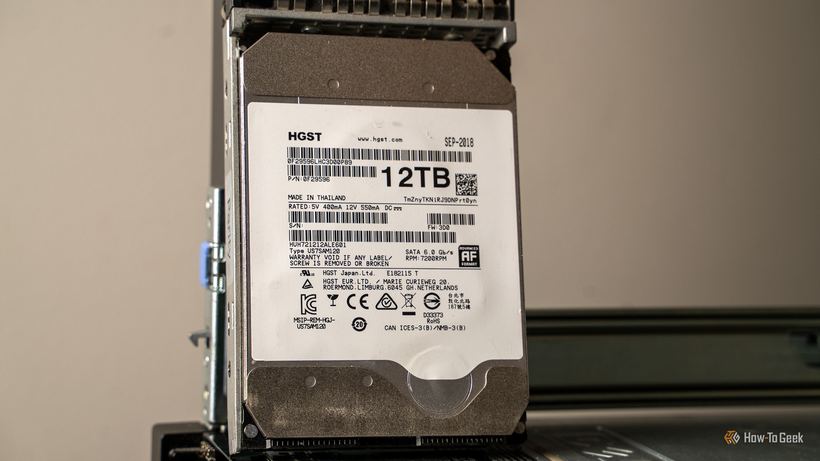
You're shopping for a computer hard drive and notice that an enterprise model with 16–22 TB costs less than a regular consumer drive with smaller capacity. Sounds odd—enterprise equipment is usually more expensive. Let's figure out why this happens and whether it's worth going for.
Why an enterprise drive might cost less
Enterprise HDDs are manufactured by the millions for data centers and large companies. When a company upgrades its server fleet, thousands of working drives hit the secondary market—and pricing there no longer follows retail logic.
These drives are sold under various labels:
— Recertified / Renewed — tested by the manufacturer or seller after use
— Server pull — removed from a server during scheduled replacement, the drive itself may have been in working order
— Surplus stock — unsold warehouse inventory with no usage
— Seller refurbished — restored by the seller without manufacturer involvement
When this purchase makes sense
1. You need large capacity for cold storage—archives or backups where the drive runs infrequently.
2. You're buying from a reputable specialized seller, not some random individual.
3. The seller offers at least a 90-day warranty and clearly describes the drive's condition.
4. You're prepared to immediately check the drive with CrystalDiskInfo and review SMART parameters.
For a system drive or storing active work files, it's better to get a new consumer HDD with full manufacturer warranty. Reliability matters more than savings here.
What to watch out for
— No warranty or vague description: "works, tested"
— Unclear origin: no serial number, manufacturer not specified
— Suspiciously low price with no explanation
— Seller with no reviews or minimal marketplace history
How to check the drive after purchase
1. Install CrystalDiskInfo and open the SMART data—the program will immediately show overall health.
2. Check three key parameters: Reallocated Sectors Count, Current Pending Sector Count, Uncorrectable Sector Count—all should be zero.
3. Run a short test through HD Tune or the drive manufacturer's proprietary utility.
4. Before active use, back up important data to another storage device.
If the drive clicks, freezes, or isn't recognized by the system—stop immediately: continuing increases the risk of data loss.
Not sure about a drive's condition after purchase or want to check an old storage device? Come to iClub.pro: we'll read SMART data, run tests, and give you an honest assessment of whether it can be used further. Diagnostics are free.