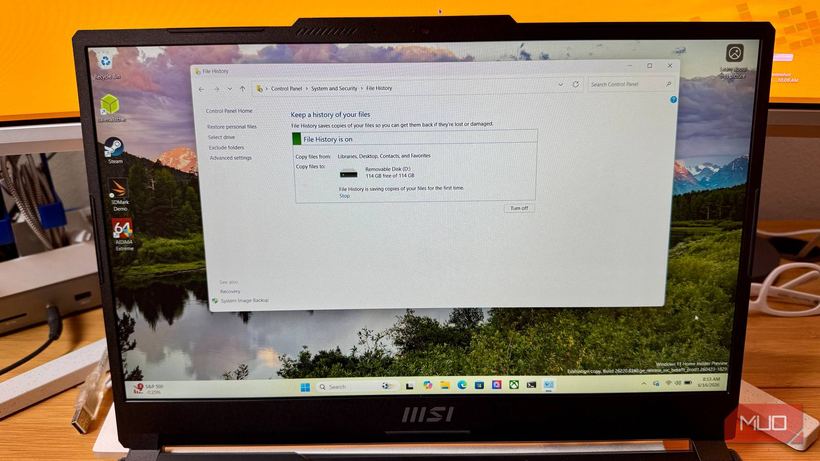
Have you ever accidentally overwritten a file and lost hours of work? You edited a document, saved it — and then realized the previous version was better, but there's no way to get it back. Windows has a built-in tool that solves this problem, but it's disabled by default.
Why Files Are Lost Forever
Regular backup creates one snapshot of your files at a specific moment. If you overwrite a document between two backups — the intermediate version is gone forever.
Main reasons:
— Accidentally saving over the version you need
— Regular backup doesn't keep change history
— Windows versioning tool is disabled by default
— In Windows 11 it's hidden in the "legacy" settings section that few people check
What Is File History
File History is a tool built into Windows since version 8. Every hour it automatically saves copies of your files to an external drive. This isn't just a backup, but a full version timeline: you can roll back to a version from an hour, day, or week ago.
By default, these folders are protected: Desktop, Documents, Pictures, Music, Videos, and OneDrive offline files.
Important: the tool doesn't save Windows itself or installed programs — only your personal files.
How to Enable: Step-by-Step Guide
1. Connect an external drive to your computer via USB. The capacity should be sufficient to store multiple copies of your files — a terabyte drive is affordable today.
2. Open Control Panel (find it through the Start menu search).
3. Go to "System and Security".
4. Click "File History".
5. Windows will detect the connected drive and offer it as storage.
6. Click "Turn on" — done, the tool is running.
Fine Tuning
In the left panel, click "Advanced settings" to:
— Change save frequency (minimum — every 10 minutes instead of the standard hour)
— Set version retention period (default — indefinitely, until space runs out)
— Add any folder: right-click it in File Explorer → "Include in library"
How to Restore the Version You Need
1. In the Start menu search bar, type "Restore your files with File History".
2. The version browser will open — all saved copies in chronological order.
3. Browse backward with arrows, preview files, and select the version you need.
4. Click "Restore".
Why You Shouldn't Replace This with Cloud
In Windows 11, Microsoft promotes backup through OneDrive — it requires an account and takes up cloud storage. File History works completely offline, without subscriptions, and the data stays on your drive.
"Legacy" status doesn't mean the tool will stop working — Microsoft simply isn't actively developing it. For protecting personal files, it's still one of the most reliable options on Windows.
If data is already lost and File History wasn't enabled — don't panic. iClub.pro specialists handle data recovery from hard drives and SSDs. Come for a free diagnostic at: Novosibirsk, 35 Kommunisticheskaya St.