If your Galaxy Watch has stopped working properly with your smartphone—notifications aren't coming through, Samsung Health is glitching, alarms aren't going off—a simple restart often won't fix it. There's a more effective solution: clearing the system cache.
Why malfunctions occur
Any Android app—whether on a smartphone or smartwatch—creates two types of files:
— Data files: logins, settings, activity history. These shouldn't be deleted—you'd have to set everything up again.
— Cache files: temporary data to speed up performance. These are what eventually cause problems.
Cache works like "templates": the app keeps what it needs on hand to load faster. But over time, these files accumulate, become outdated, or start conflicting with updates. The system is supposed to clean them automatically, but in practice this hardly ever happens. The result—freezing, sync errors, and unstable watch behavior.
When cache clearing helps
— Notifications aren't arriving or are delayed
— Samsung Health isn't syncing workouts and sleep
— Alarms aren't going off
— Apps are freezing or taking too long to open
— After an update, the watch started performing worse
How to clear system cache: step-by-step instructions
Read carefully and don't skip steps. The recovery menu looks unfamiliar, but there's nothing dangerous about it.
1. Turn off the watch: press and hold the side button, select "Power off" and confirm.
2. Enter recovery mode: simultaneously press and hold the side button and the "Back" button for 5 seconds until a screen with "Reboot" appears.
3. Select Recovery Mode: scroll with the wheel to "Recovery" and press the side button to confirm. The watch will reboot and display the recovery menu.
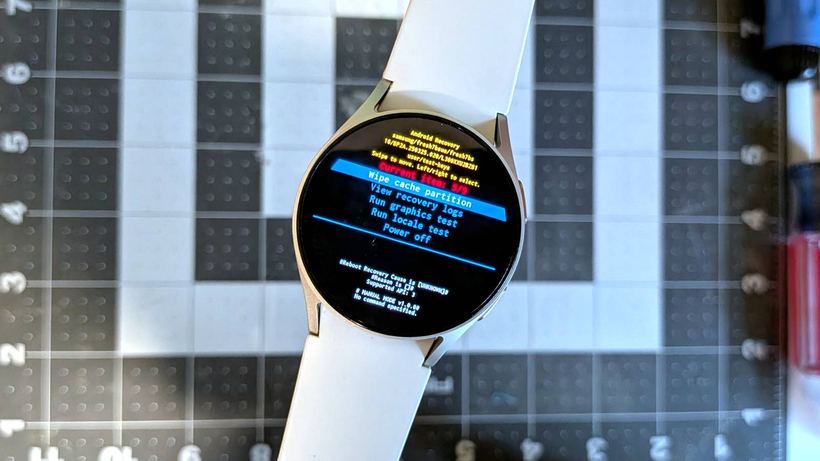
4. Clear the cache: find "Wipe cache partition" and confirm. This only deletes temporary files—your data and settings remain untouched.
5. Reboot: select "Reboot system now". The watch will start in normal mode.
After rebooting, check synchronization. The first startup will take a bit longer—the cache is being rebuilt, which is normal.
If clearing doesn't help
Cache clearing solves most software glitches, but not all. If the problem persists, the next step is a full factory reset. This involves wiping with data loss, so it's best done deliberately.
If neither method helps, the cause might be hardware-related. Come in for free diagnostics at iClub.pro—we'll figure out what's wrong and offer a solution.