We received an iPhone 14 Pro Max with a classic "floating" issue: spontaneous reboots dropping into recovery mode. Such defects are a headache for any service center: they occur irregularly, reflashing doesn't help, and blind disassembly takes hours of work.
Our approach: data first, screwdriver second.
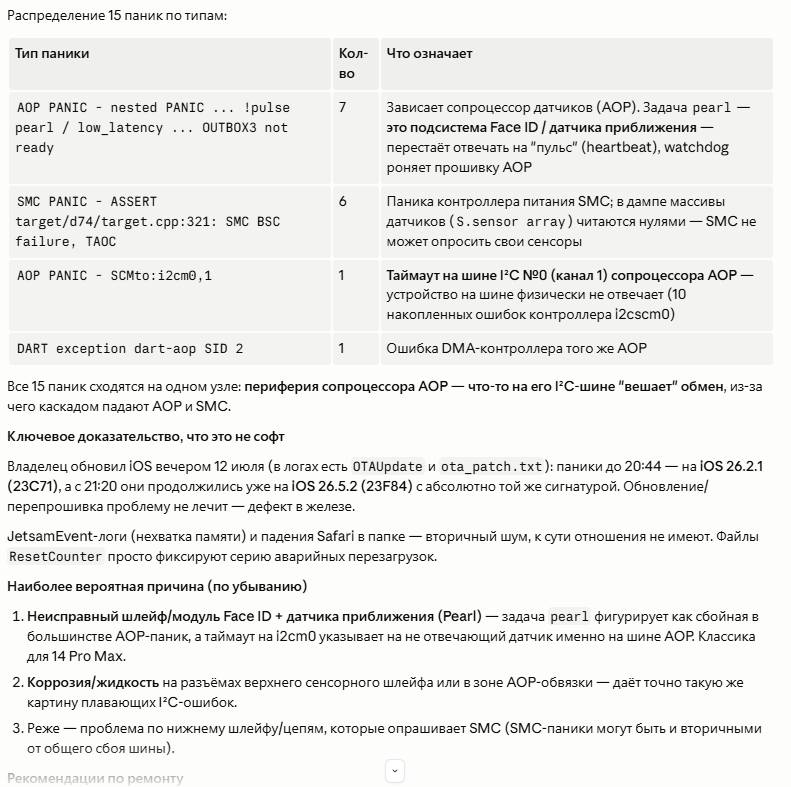
We unloaded the device's diagnostic logs and analyzed them using Claude. The picture became clear quickly:
▪️ 15 kernel panics in 48 hours — all from coprocessors (AOP/SPU and SMC), not from iOS;
▪️ timeouts on the I²C bus of the sensor coprocessor and failures in the "pearl" task (Face ID / proximity sensor subsystem);
▪️ panics persisted after updating iOS — a software cause was ruled out even before opening the device.
Hypothesis: a fault in the proximity sensor circuit. Opening confirmed this 100%: the device had been repaired previously, and the proximity sensor flex cable was pinched by a screw — mechanical insulation damage and a short circuit.
We eliminated the short circuit, restored and insulated the flex cable. The device is stable, original Face ID is preserved — without replacing the module and without loss of functionality for the client.
Industry takeaway: the combination of "device telemetry + AI analysis" turns diagnostics from an art into an engineering process. We arrived at the disassembly already knowing what to look for.
#RepairEngineering #iPhoneRepair #AI #Diagnostics #ServiceExcellence