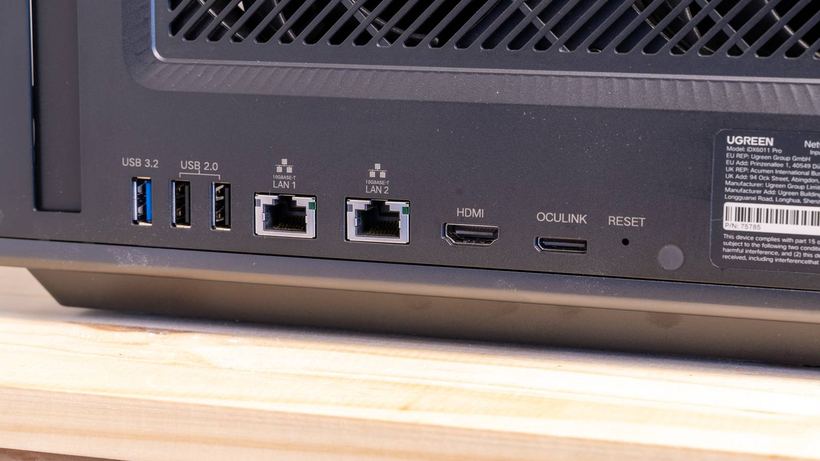
A NAS server stores all your data, and those free USB ports are tempting to use. In reality, some devices slowly kill the ports, corrupt files during transfer, or instantly fry the motherboard. Let's look at what to avoid.
USB Fans: Vibration Loosens the Port
A USB fan looks harmless, but constant tiny vibrations transfer directly to the port and solder joints. Over time—months or years—the port loosens and fails. Meanwhile, the tiny fan provides almost no benefit: it won't replace proper room ventilation.
What to do: improve cooling in the room where your NAS is located, or replace the device's internal fan with a quality one.
Unknown Devices and Cables: Risk of Complete Data Loss
This is the most dangerous category. A found flash drive, a cable from someone else's bag, a device "for just a minute"—all pose real threats:
— Flash drives may contain malware that will immediately infect your server.
— USB "killers" exist—devices that deliver high voltage and fry the board.
— Similar "killers" disguise themselves as ordinary cables.
If you find a cable on the street or at the airport—leave it there. The cost of a mistake far exceeds the price of a new cable.
What to do: check data from an unfamiliar drive only on an isolated computer that's not connected to the network.
Cheap Cables: Corrupted Files Halfway Through
A cable from the "junk" drawer is a common cause of problems when copying data:
— Poor insulation and thin conductors deliver unstable power.
— Files can corrupt mid-transfer.
— When copying 10 TB of data, a failure halfway through is a real disaster.
What to do: use the cable that came with the device, or buy cables from trusted brands that match your port's specifications.
Cheap Unpowered USB Hubs: The Drive Will Disconnect at the Worst Moment
A budget hub splits limited power among all connected devices. When there's not enough power:
— The hard drive will suddenly disconnect.
— If a write was in progress—files will corrupt.
— The drive will constantly reconnect and wear out faster.
What to do: for multiple devices, get a hub with its own power supply from a reputable manufacturer. Connect 3.5-inch hard drives only through an external power source.
Flash Drives as Permanent Storage: They Die Without Warning
A flash drive isn't designed for continuous writes. Memory cell lifespan is limited, and with heavy use it dies suddenly—taking your data with it.
What to do: use flash drives only for one-time file transfers. Store everything important on HDD or SSD.
General Rule
If a device is cheap, of unknown origin, draws a lot of power, or has moving parts—don't connect it to your backup server.
If a USB port on your NAS has failed, data is corrupted, or a device isn't recognized—come in for free diagnostics at iClub.pro. We'll figure out the cause and offer a solution.